Mangaroa Farms · Flagship Programme

The Internship
Aug 2026 – April 2027

A seven-month, full-immersion learning experience on a regenerating farm in Whitemans Valley. Live on the land and learn the whole cycle — spring planting through to autumn harvest — across the market garden, nursery, agroforestry, and native restoration.

Applications close Friday, 10 July 2026 · You'll hear back by Sunday, 12 July 2026

7
months, seed to harvest
~25
hours per week
4
places in the cohort
3,000
acres in the valley
Working in the gardens at Mangaroa Farms

An invitation

This internship is our flagship learning experience — a seven-month, full-immersion programme designed to build real capability across a functioning regenerative farm. You'll live on the land, contribute meaningful work, and learn through direct involvement in the systems that make Mangaroa run, from seed to harvest.

It's the long arc on purpose. Arriving in late winter as the soil wakes up, planting through spring, tending through summer, and bringing it home at harvest — that full cycle is where the real learning lives. We're after a small handful of people ready to give themselves to that arc, and leave with a craft they can name.

The shape of it

An honest deal, plainly said.

What you give

Around 25 hours a week on the whenua.

Four to five days of hands-on, outdoor work, plus one lighter day for learning, reflection, and integration. You'll rotate through the core areas of the farm — building breadth first, then stepping into more responsibility in those systems toward the end.

Practical, physical, and tied to real outcomes on the land. Some days you'll work alongside the farm crew, some days you'll run a list with another intern.


What you get

Your own room, awesome kai, and a craft you can name.

A room of your own in a shared farm house. Base meals — seasonal, organic where possible, much of it grown on-site. Structured mentorship and exposure across every system on the farm.

And the deeper offer: a full season's apprenticeship in regenerative land work, a path to formal certification, and a connection into a wider network of regenerative practitioners.

The frame

14 August 2026 to 14 April 2027.

Seven months, start to finish. We prioritise people who can hold the whole arc — there's a depth that only opens up across a full planting cycle.

Four places. We know seven months is a big commitment — if your life needs some flex within that window, tell us on the form and we'll talk it through.

This is an unpaid internship. The exchange is accommodation, base meals, and hands-on mentorship for around 25 hours a week on the land — there's no payment, and we don't charge for the programme. No money changes hands either way.

What you'll be doing

You'll move across the core areas of the farm.

Work is practical, physical, and tied to real outcomes on the land. You'll build breadth across these areas first, then step into more responsibility in the systems you connect with toward the end of the programme.

Market Garden

Bed prep, planting, harvesting, and the crop systems that feed the farm shop and the table.

Nursery

Propagation, potting, and the tree systems that supply our planting season.

Agroforestry & Orchard

Establishment, maintenance, and exposure to the design thinking behind integrated tree systems.

Restoration

Native planting, wetland work, and weed control across varied terrain.

Farm Systems

Basic livestock movement, fencing, and invasive pest control.

Property Management

Plant care, mulching, pruning, and the steady maintenance that keeps a working farm running.

Programme structure

A weekly rhythm that moves with the season.

The week

Four to five work days of hands-on, outdoor work, and one lighter day for learning, reflection, and integration. Informal teaching is embedded throughout.

Rotations

You'll move across the core areas of the farm — building breadth across the whole operation first, then stepping into more responsibility in those systems toward the end of the programme.

The cohort

Four interns, living and learning together. The quality of the experience depends on how the group shows up — shared meals, weekly check-ins, simple and respectful living agreements.

The arc

The programme kicks off with an orientation and concludes with a graduation. Late winter to mid-autumn, you'll see a planting through from the ground up — the same beds, the same trees, across a full cycle of the land.

Learning approach

Grounded in doing.

This is an active learning experience. Most knowledge is gained through daily work on the land, supported by direct mentorship from the Mangaroa team and weekly focused sessions on soil systems, water, agroforestry, and farm operations.

Self-guided certification

Alongside the on-farm work, interns are encouraged to enrol in a self-guided learning programme. We can support your journey through two affiliated pathways — move through the material at your own pace, and those who complete the full curriculum leave with formal certification. And if you've recently completed a PDC and are looking for somewhere to put that theory into practice, this programme is a great fit — tell us, and we can adapt it to bespoke learning situations.

  • Level 2 Certificate in Horticulture (Primary ITO) — a seven-month programme that runs the length of the internship.
  • Permaculture Design Certificate (online via APW or other providers) — seven modules, roughly one a month.

Why seven months? It's the span of a full planting cycle — long enough to learn to run a market garden from spring planting through to harvest, and to move through a module of structured theory each month alongside the practical work.

A typical week

It moves with the weather and the work.

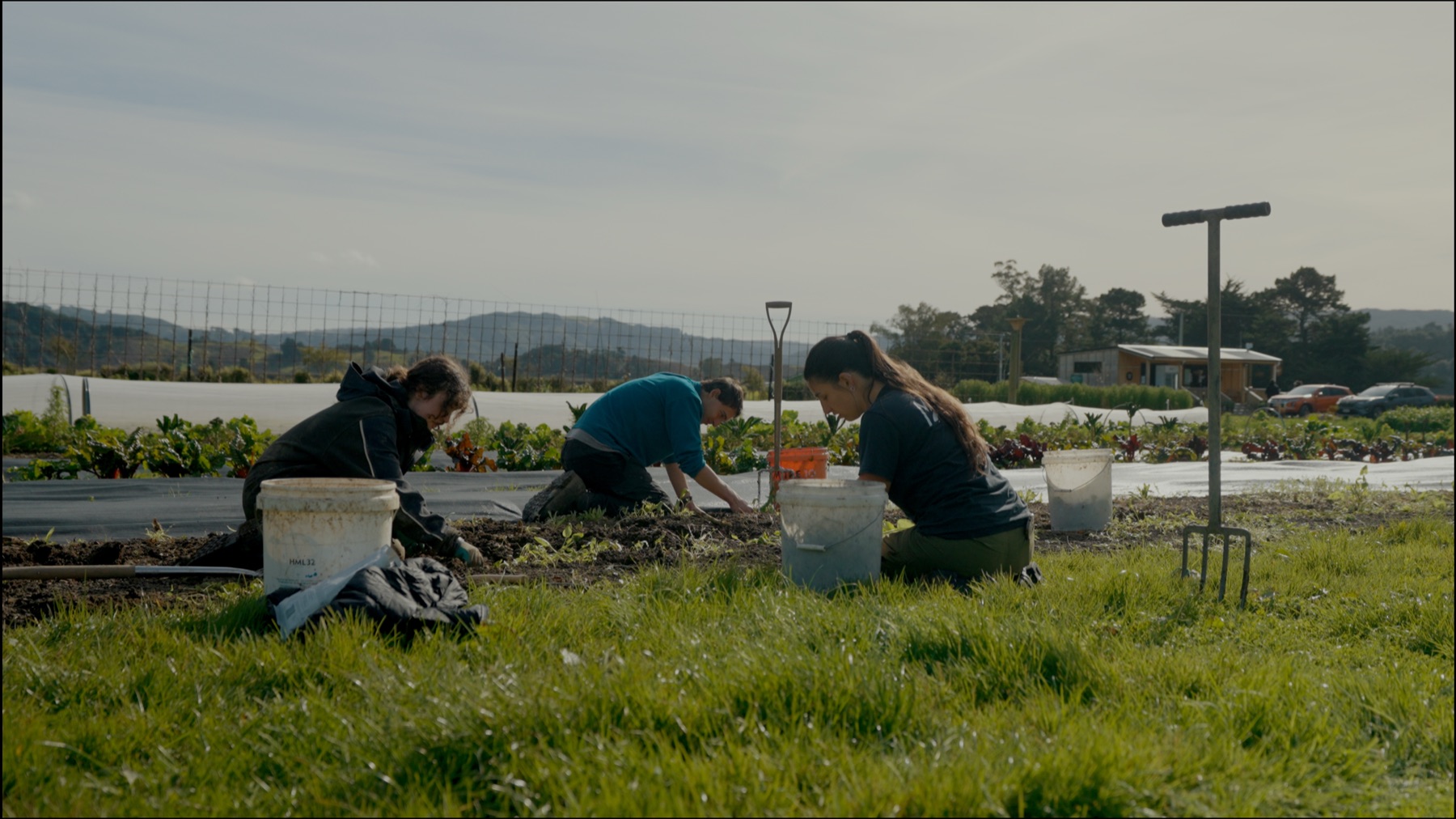
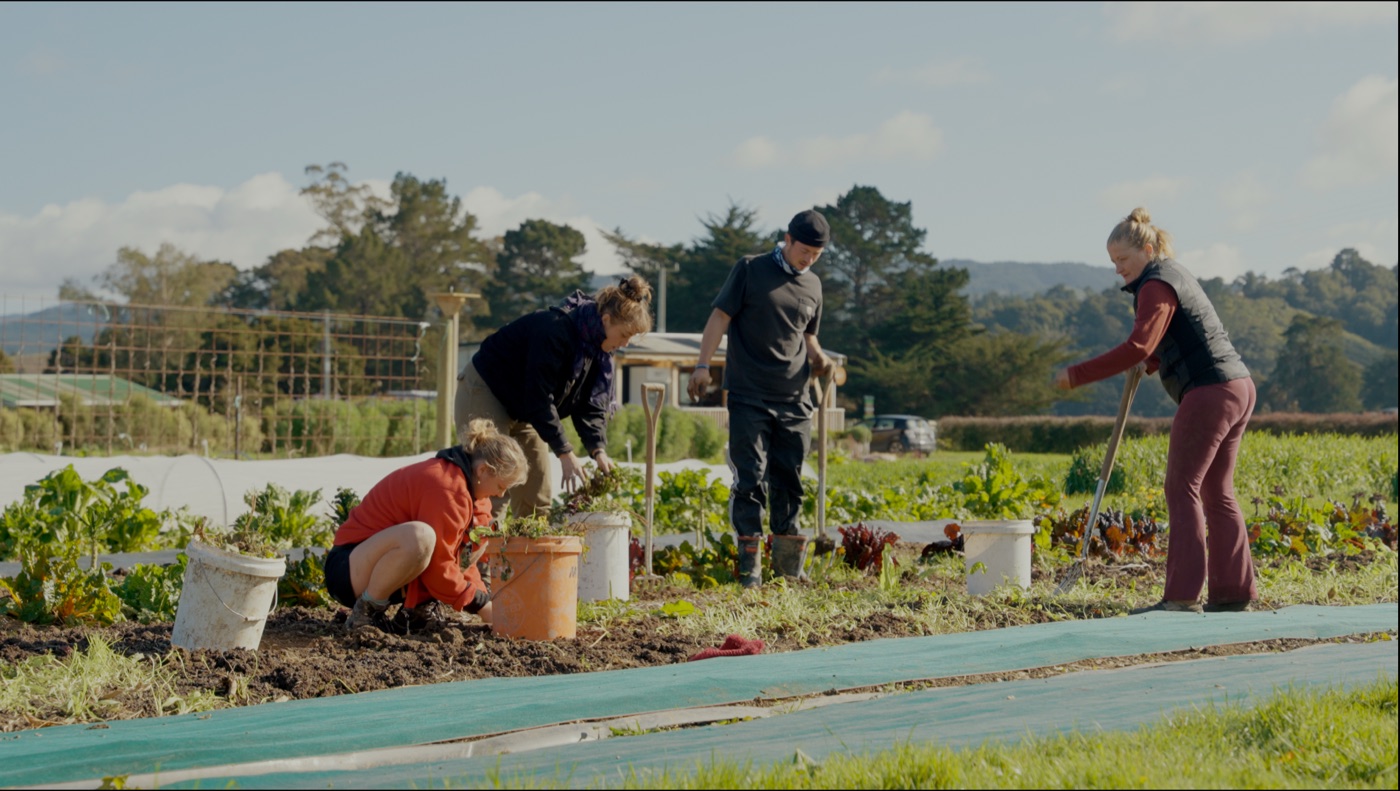
The team working together in the market garden

Mornings

Coffee, breakfast, the day's plan. Hands-on outdoor work across whichever rotation you're in — beds, plantings, the nursery, restoration sites, animal chores, whatever the season's asking for.

Group Learning Session

Whilst learning happens on the job and throughout the programme, one day a week we'll have an early lunch and jump into a (slightly) more formal learning activity in the afternoon.

Afternoons

Most days the afternoon is yours — time to work through your theory curriculum, walk our Farm Trail, or chill. Some days, if we're under the pump, you might be asked to put in an afternoon shift — and there'll be opportunities to join further farm missions to deepen your experience here.

Evenings

Shared meals most nights — cooks rotate, the table holds the whole crew. Beyond that: music, board games, or ecological discussion sessions about what you've been reading, observing, and working on. Some nights a fire and a yarn, some nights an early bed.

Weekends

Most weekends are time off to explore — Wellington, the Tararua range, native forest and east-coast beaches all within reach. As the farm steps further into a pick-your-own programme — with the coffee cart open and our public weekends deepening — some weekends will become work days, and some weekdays will free up for exploring instead. We'll endeavour to set a schedule that works for everyone.

Summer Holidays

Christmas and New Year fall mid-programme. The farm doesn't stop, but it does slow down, and you're welcome to head back to your respective places during that time. Likewise, if you've got summer missions, festivals, or journeys planned, there's flexibility to take off through the programme. We're hoping people can be here start to finish, but you're welcome to take time off across that period — we'll work it out together.

House culture

A shared living environment that runs on care, not rules. Pull your weight in the kitchen, look after the spaces, be honest when something isn't working. You'll be relied on as part of the team.

Who we're looking for

Open hearts, willing hands, and a real desire to learn the land.

This is hands-on, physical work in all weather, across varied terrain. We're not expecting market-garden veterans — we're here to set you on that path — but some previous experience on the land will help you hit the ground running. Strong work ethic, reliability, and the ability to live and work well in a small group matter as much as any skill.

What helps

You'll be relied on as part of the team. Beyond a willingness to learn and take initiative, experience in any of these helps — and if you've got a real strength, tell us:

  • · Market gardening
  • · Tree planting & nursery
  • · Permaculture & agroforestry
  • · Restoration & native planting
  • · Livestock & farm systems
  • · Building & carpentry
  • · Cooking & kitchen
  • · Land-based trades

Not a checklist. Tell us what you actually bring and where you've done it — and where you'd love to grow.

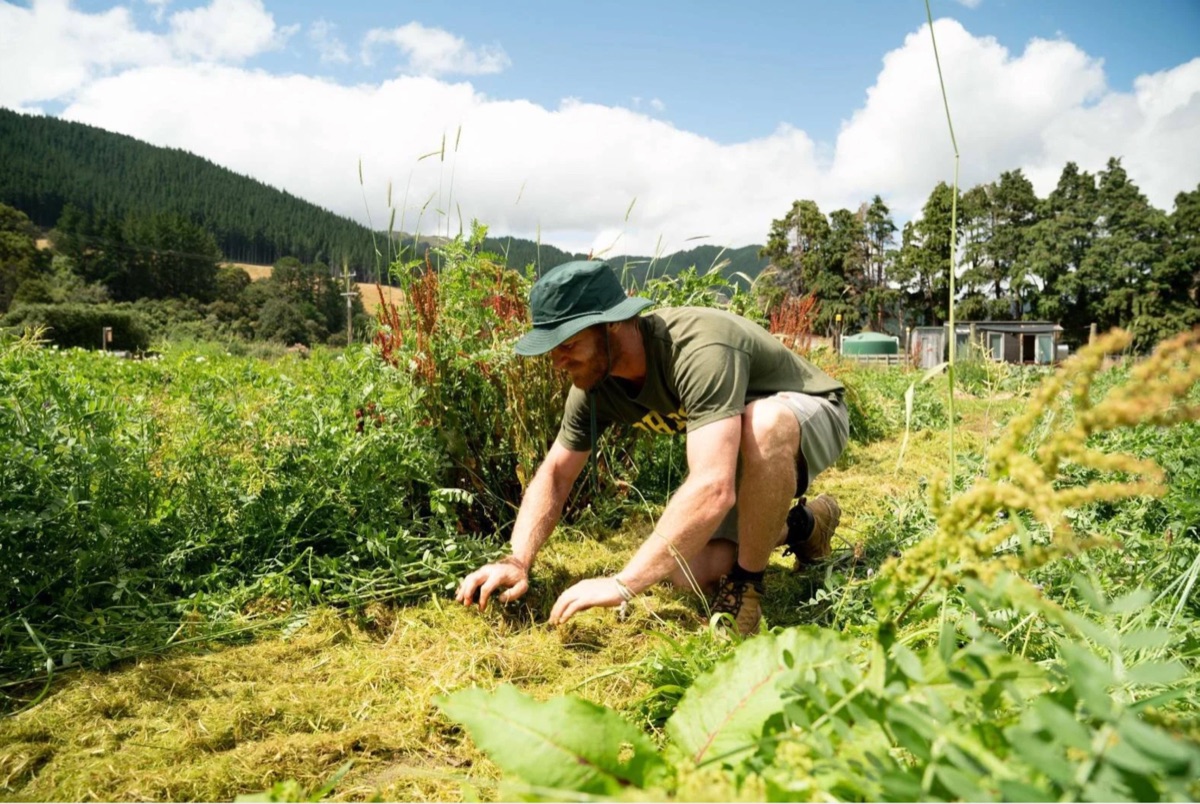
A farmer working in the garden under blue sky

The land

3,000 acres in Whitemans Valley.

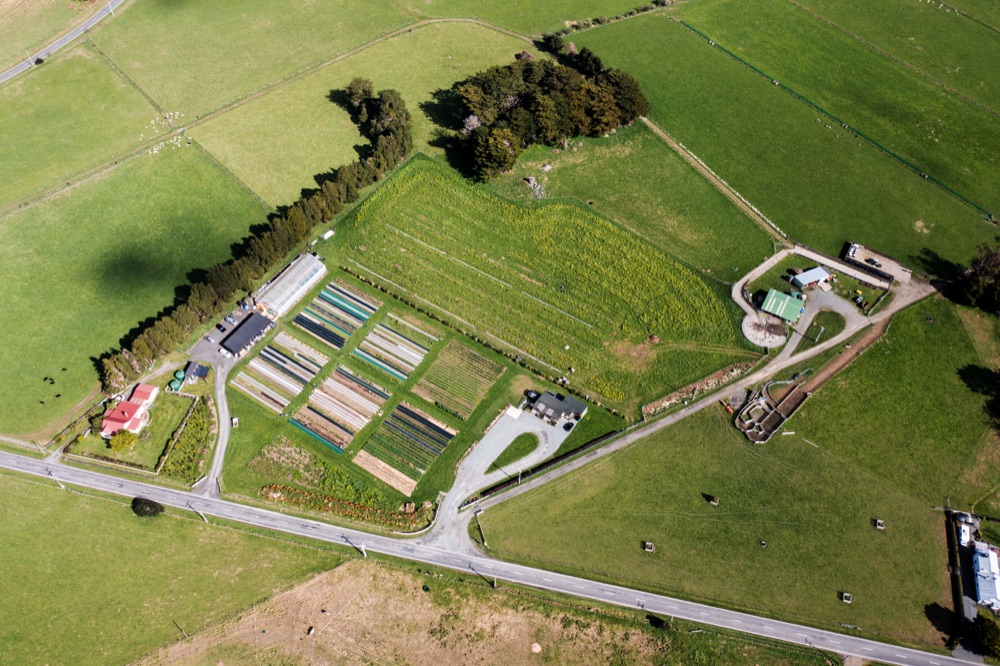
Mangaroa Farms is a community food hub and resilience centre nestled alongside the Mangaroa River, 45 minutes from Wellington, 10 minutes from Upper Hutt. River bottom, native bush, market garden, free-range pasture, a yurt, a heritage church, a working kitchen.

A farm in a real flourishing chapter. Trees going in. Gardens scaling up. The shop running. Events running. The kind of living, working place where a seven-month apprenticeship has somewhere real to land.

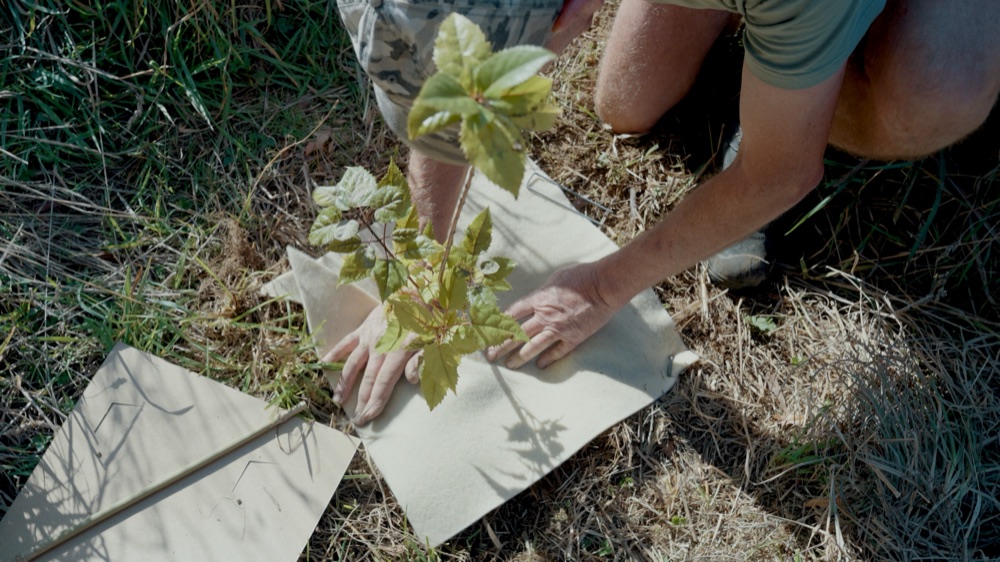
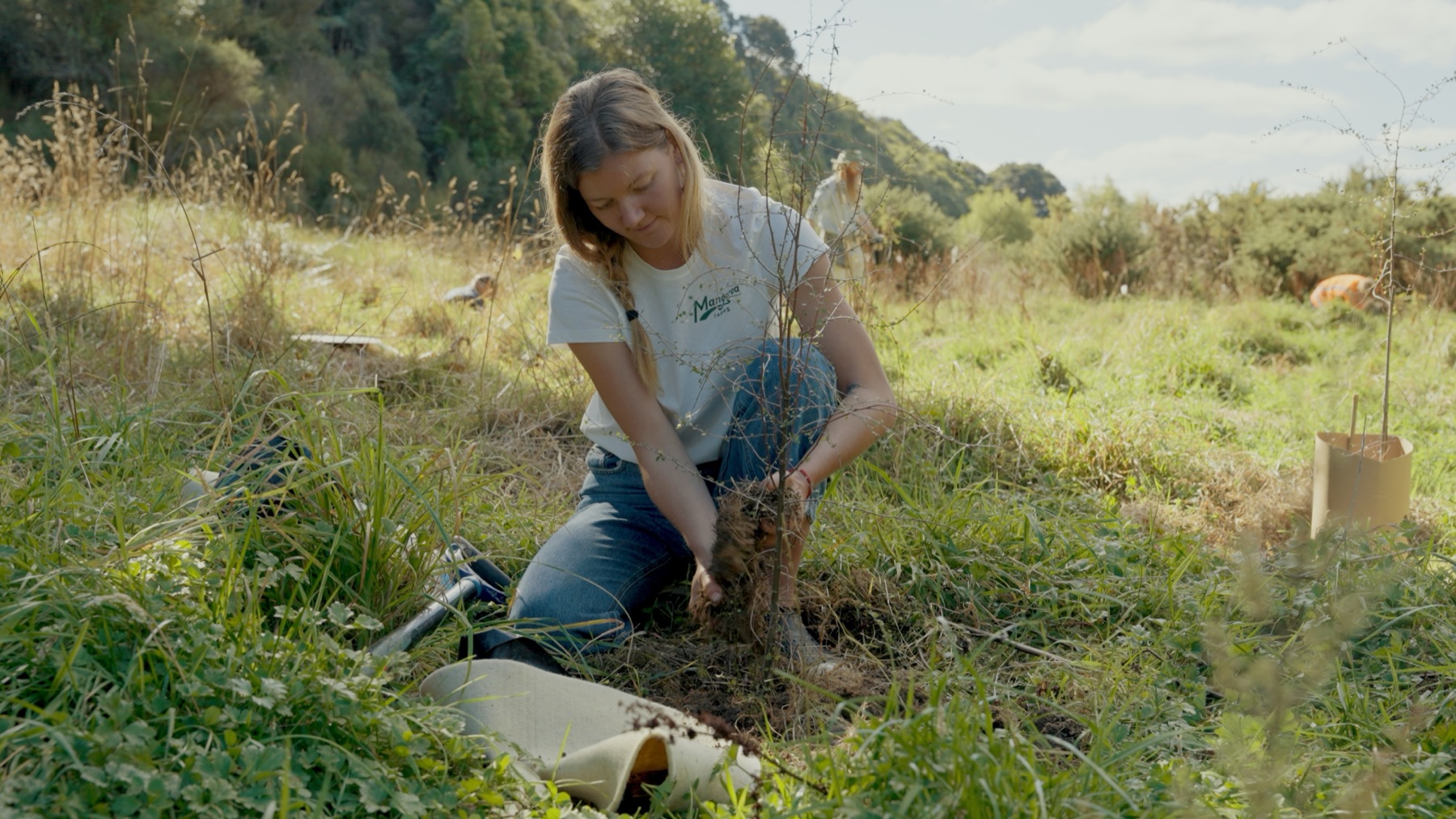
Hands planting a young tree on the farm
Aerial view of the farm and gardens
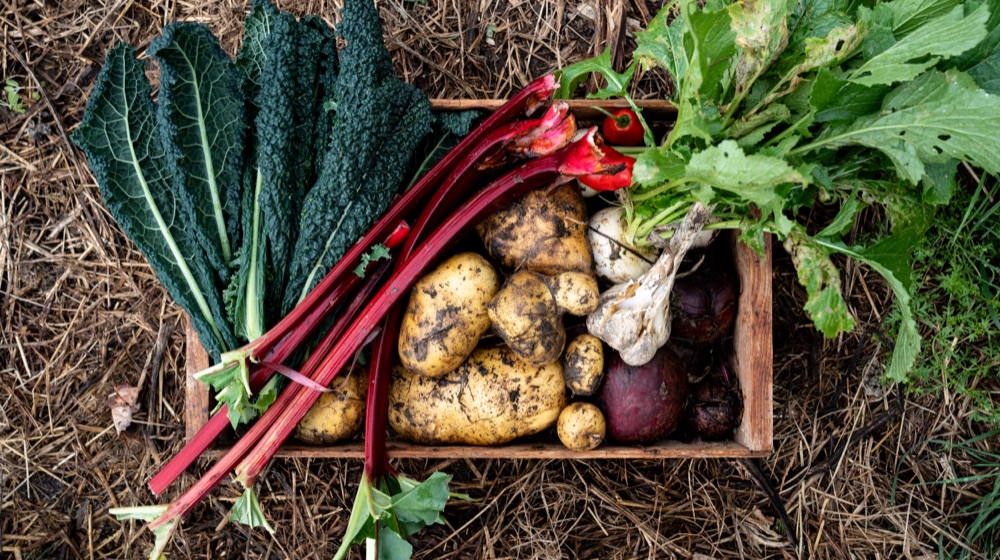
A box of vegetables fresh from the garden
A farm worker laughing with muddy hands

The people

A small crew. A big mission.

During your seven months here you'll become part of the community living and working together in the valley — our farm team and three other interns. Everyone eats together at night, and mentorship is direct and embedded: you learn by working next to people who know the systems.

Our team holds the direction at a high level and guides the work — and we welcome your initiative. The more you bring, the more there is to learn.

This experience could change you.

What you'll take away:

Certification

A formal qualification, if you go the distance.

Complete the self-guided curriculum and leave with a Level 2 Certificate in Horticulture and/or a Permaculture Design Certificate — structured theory layered onto a full season of practice.

Craft

The capability to operate in a market garden, orchard, and regenerative farm.

Soil systems, propagation, crop planning, agroforestry, restoration, off-grid living. A full cycle of doing, not just watching.

Cohort

Three others who chose the same arc and showed up for it.

Seven months living and working alongside people changes things. Some of these become lifelong collaborators.

Contribution

Real outcomes you can come back and visit.

Trees planted that you watched go in. Beds you turned and harvested. Pieces of the whenua left better than you found them.

Practicalities

The fine print.

Just to be clear — is this a paid role?
No — it's an unpaid internship. The exchange is your time on the land — around 25 hours a week — for accommodation, base meals, and hands-on mentorship across every system on the farm. There's no payment, and we don't charge for the programme; no money changes hands either way. What you take away is the learning, the experience, and a path to formal certification.
That's a seven-month commitment — how firm is it?
The programme runs 14 August 2026 to 14 April 2027, and we do want people there from start to finish — the depth comes from the full cycle. That said, we know seven months is a real ask. Christmas and New Year fall mid-programme, and there's flexibility for summer missions or journeys you've got planned — if you'd need some flex, tell us your situation on the form and we'll work it out together. Preference goes to those who can hold the whole arc.
What does "around 25 hours a week" actually mean?
Four to five days of hands-on outdoor work, plus one lighter day for learning and reflection. Informal teaching is embedded throughout. Days move with the weather and the season.
What's covered, and what isn't?
Covered: a room of your own in a shared farm house, base meals (seasonal, organic where possible, much grown on-site), access to tools, systems, and mentorship. Not covered: travel to the farm, the cost of your certification enrolment, personal spending, your own gear and clothing, and food beyond the base meals.
Do I need experience?
We're not expecting market-garden veterans — we're here to set you on that path. Some previous experience on the land will help you hit the ground running, and this round we're leaning toward people ready to contribute meaningfully from early on. If you've got experience and want to go deeper across a full season, this is for you. And if you've recently completed a PDC (Permaculture Design Certificate) and are looking for somewhere to put that theory into practice, this programme is a great fit — let us know and we can adapt it to bespoke learning situations.
What about certification — how does that work?
You're encouraged (not required) to enrol in a self-guided programme alongside the on-farm work. We can support two pathways: a Level 2 Certificate in Horticulture through Primary ITO, and a Permaculture Design Certificate offered online. Move through the material at your own pace; those who complete it leave with formal certification.
Where will I live, and do I need a vehicle?
Accommodation is on the farm — your own room in a shared house, alongside the other interns and volunteers. A vehicle isn't required but makes weekends and supply runs easier; the farm is half an hour from Wellington and ten minutes from Upper Hutt. Tell us on the form whether you'll be coming with one.
How do you decide who comes?
We read every application closely and shortlist hard. Strong, aligned candidates are invited to a short call on the evening of 13 or 14 July — a yarn, not an interview, to feel the fit on both sides. Everyone hears back before 12 July, with final selection by 21 July.

What to bring

Pack for the long haul.

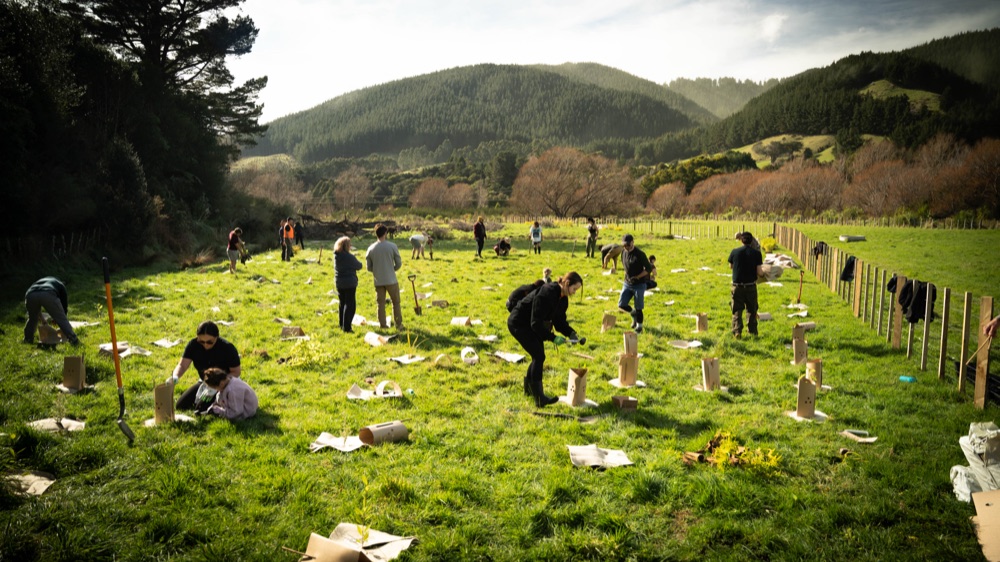
Planting trees in the field
01

Wet weather gear

A real waterproof — you'll be out across late winter rain and into the warmer months.

02

Sturdy boots

Not your gym shoes. They'll get muddy, and they'll earn it over seven months.

03

Layers for every season

You arrive in winter and finish in autumn — thermals through to sun gear.

04

A sun hat and water bottle

Summer on the land is real work in real heat.

05

Your own gloves, maybe a favourite tool

We've got plenty, but bring what you love working with.

06

Something to study with

A laptop or notebook for the certification material and weekly sessions.

07

Personal toiletries

We provide household stuff — bring your own personal kit.

08

Whatever quiet practice keeps you good

Yoga mat, journal, sketchbook, music, walking shoes — seven months is a long arc to stay well across.

Got questions?

Reach out — we'd rather hear from you than not.

Fire away any questions you've got about the programme, your situation, or whether it's a fit. Email Zeb and he'll write back.

zeb@mangaroa.org

Applications close

Friday, 10 July 2026

Shortlist calls

Evenings, 13–14 July

Programme runs

14 Aug 2026 – 14 Apr 2027

Join the cohort

Apply for the 2026–27 Internship

Takes about ten minutes. We read every application and shortlist hard. Strong candidates will be invited to a short call on the evening of 13 or 14 July — a yarn, not an interview. You'll hear back before Sunday, 12 July 2026.

01 / 17

What's your name?

The one we'd put on a welcome card.

1 / 17